
“The slenderest knowledge that may be obtained of the highest things is more desirable than the most certain knowledge obtained of lesser things.” – Thomas Aquinas
An acquaintance once told me, “everything in life is a metaphor.” While I wouldn’t go that far, it seems to me it would be a mistake to take everything literally.
There is a bias towards believing only the literal, factual, or quantifiable can be “true.” We often hear, “That’s only a story. A work of fiction. Just make-believe. A fantasy. Unless it’s literally true, it can’t really be true. Only non-fiction counts. That’s the objective truth. Trust history.”
Orwell wrote, “history is written by the winners.” And even objective facts are now called “fake” or part of a “hoax.” Narrative fallacies dominate our thinking. So, it’s never just a story. And stories are practically never objective. Story-tellers can’t help but represent a point-of-view. All stories interpret facts to one degree or another. And many people believe stories told by their side are true, while the other side can’t be trusted.
Yet some things are factually true. We now know Pi to 62.8 trillion digits. We know the Earth is an oblate spheroid corkscrewing through space, orbiting a star that orbits a galaxy 100,000 light years across. We know the scientific method works. We know many things with close to black-and-white levels of precision. But in the grey areas, stories seek a more profound truth. Like fiction, this kind of truth is rarely “pure,” although our dedication to it ought to be. Madeline L’Engle believed stories embody our search for truth. She restated Karl Barth’s view: “I take the Bible far too seriously to take it literally.” And she drew a distinction between truth and literal facts.
It seems to me literal facts are the domain of math and science. All the rest is more obscure, often difficult or intimidating, and sometimes terrifying.
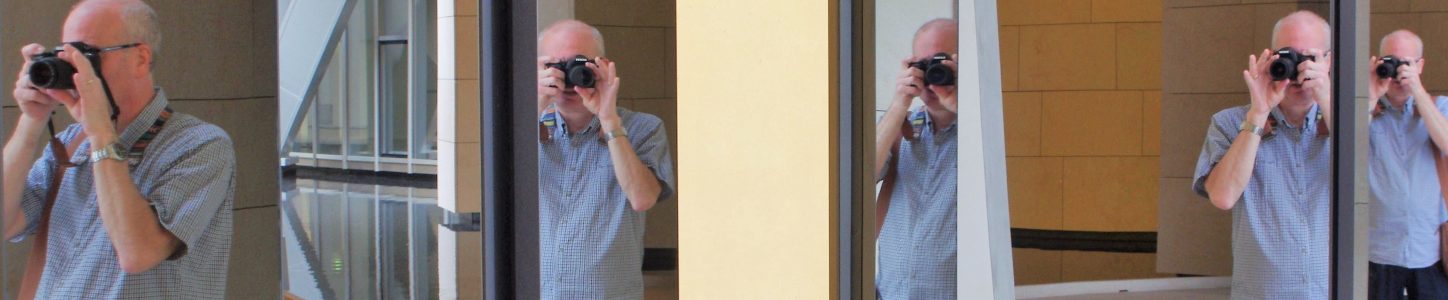
It is a fact that I am an aging white male with a certain set of experiences and skills. The truth about me is much more complicated. My stories are attempts to shed some light on my truth, yet my truth may never be known, at least not until my life story is over.
There is no such thing as a mere story. Inside every story, no matter how mundane, fanciful, or silly, there is truth. It’s our challenge to find it. Every fact is important, if only as a part of a larger pattern. I believe we would be unable to find the truth without allegory, metaphor, and simile. John Bunyan wrote:
“May I not write in such a style as this?
In such a method, too, and yet not miss
My end–thy good? Why may it not be done?
Dark clouds bring waters, when the bright bring none…
Solidity, indeed, becomes the pen
Of him that writeth things divine to men;
But must I needs want solidness, because
By metaphors I speak? Were not God’s laws,
His gospel laws, in olden times held forth
By types, shadows, and metaphors?…
The prophets used much by metaphors
To set forth truth; yea, who so considers Christ,
his apostles too, shall plainly see,
That truths to this day in such mantles be.”
So, perhaps Barth was right. If we take stories too literally, we can miss the truth. If we expect to find truth – pure and simple – even in the gospels, we might be disappointed. Jesus taught in parables – metaphors for larger ideas. The Psalms and the prophets traced out images that point us towards the truth. If we want to understand the light, we must be prepared to find it in stories or perhaps not at all.
 MurrayWorks