
In 1970, Sun Ra recorded “Myth Versus Reality.” It begins with the spoken words, “If you’re not a myth, whose reality are you? If you’re not a reality, whose myth are you?” What we call reality is entangled with stories – myths and legends – narratives that can illustrate deeper meanings than mere facts. The implication is that myth is as much a part of who we are as reality.
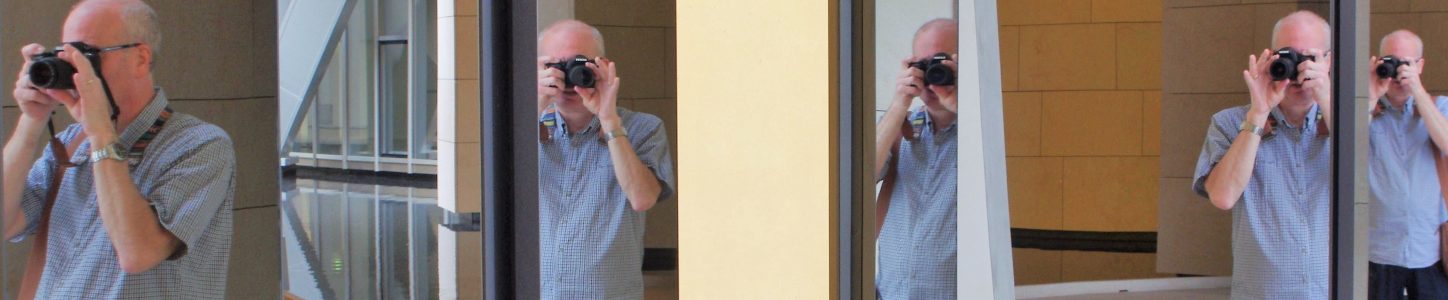
I am a man of a certain age and background. I can be “Googled.” The reality of my existence is in this sense objective. A long list of couples had to procreate to bring me into being. Countless teachers and mentors had some part in making me the person I am today. I am in many ways the result of my experiences, the outcome of a history I cannot change. Yet, I am even more than that. To become who I am, I also had to believe certain things. And I believe the truth of my beliefs is often open to question. It seems to me that my reality is inextricable from myth.
Stories, however imperfect or speculative, are attempts to make sense of what we cannot know for certain. Concepts of right and wrong, true and false, fair and unfair are often learned through stories. Bible stories delve into questions of ethics, justice, and virtue. The Boy Who Cried Wolf and numerous fairy tales also come to mind.
Lately, I’ve been wondering if people still believe we ought to tell the truth and play by the rules. It sometimes seems that right only applies to us while wrong only applies to them. I also question whether religion, or at least our understanding of it, is a force for good. Often it appears religion is an attempt to assert superiority or control rather than search for more light. It’s as if many believers are saying, “our beliefs are true, right, and good, but their beliefs are false, wrong, and evil!” All religions have narratives – some might say, myths – that attempt to explain how the world works. What generally happens when these stories clash? Fear, distrust, and hatred; schisms, holy wars, and civil strife.
What if the stories we know are provisional? Not wrong, but incomplete? Useful as metaphors and illustrations, but not definitive? Only the beginning of our understanding?
For several weeks in the 1980’s, a Witness for Jehovah stopped by my house every Sunday afternoon. We discussed many aspects of belief: the nature of God, the validity of scripture, the life of Jesus, and so on. In our last encounter, I said something that perplexed the young man. He had made the point that the Bible tells us everything we need to know. I said I believed God was beyond human imagination. I added that if our knowledge of God must be limited to whatever is contained in the Bible, if God isn’t greater than all the words written about him, if somehow this one book said it all, I wanted no part of believing in God. He agreed that we had come to an impasse and said he would pray for me.
For a long time, I’ve had doubts. On one hand, some treat the Bible like an idol, as if it is more important than the search for the divine, God’s kingdom, among us. On the other hand, the Bible is often said to be literally true and the summation of our knowledge of God. The trouble is, this kind of thinking in effect puts God in a little box. It seems to me God must be more than the contents of this or that Holy book. For persons with scientific interests, perhaps each discovery, and every word used to describe the infinite universe, points to a larger God than we can conceive. The stories told in “the good book” are a starting point, to be sure, but what if they are only a small part of the whole story?
I believe the story of the child in a manger, his sacrifice, and resurrection is but one representation, one tiny glimpse of a much larger reality. Stories like this can only begin to do justice to something beyond human comprehension, just as myths can only hint at parts of reality we don’t fully understand. “For now, we see through a glass darkly…” Paul wrote. It’s likely that most of what we think we know is wrong. Nevertheless, some seem to possess a troubling sense of certainty, the kind of certainty that brought us the Crusades, the Spanish Inquisition, genocide, terrorism, and sectarian violence. Perhaps we should be more circumspect about what we believe.
“Could we with ink the ocean fill, and were the skies of parchment made, were every stalk on earth a quill, and everyone a scribe by trade, to write the love of God above, would drain the ocean dry. Nor could the scroll contain the whole, though stretched from sky to sky.”
– from “The Love of God” by Frederick M. Lehman
 MurrayWorks