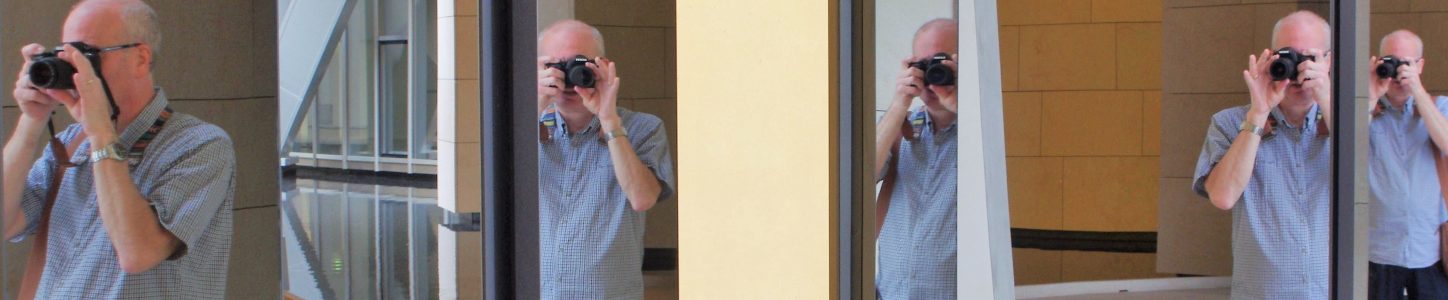

I’ve heard people described as “products” of some school or program, as if graduates are manufactured on an assembly line, uniform in appearance and quality. I recall a faculty meeting years ago when we were discussing how to make sure our students received a consistent educational experience. I commented that I believed uniformity was “neither possible nor desirable.” I received many blank stares. While it’s true that students will naturally diversify in terms of major and minor specialties, I believe educators should actively encourage diversity of thought across the curriculum. Not all students start out the same, and not all students will end their educational journey in the same place, or at the same time, for that matter.
I understood my role as more of a guide than a drill instructor. I acknowledged there are many approaches to learning and often there is more than one way to solve a problem. While the “tried and true” often works, sometimes divergent thinking is needed to reach the next level. The “Fosbury Flop” comes to mind – all world record holders in the high jump have used the over-the-bar-backwards technique pioneered by Dick Fosbury in the late 1960s. To solve an intractable problem, sometimes the paradigm must shift. And it can’t shift without people who see things differently.
It’s tempting to wish for some kind of orthodoxy. Some see the effort to teach people to understand, accept, and work with diverse groups as a form of indoctrination, as if the effort to reinforce some conservative opinions isn’t a form of indoctrination as well. It seems to me any attempt to “make sure” everyone is instilled with the same worldview, for whatever reason, is fraught with problems. Some may find they are outsiders. Some might realize, too late, that they have been led to believe things that either aren’t true, aren’t fair, or are simply hateful. This is why legions of idealogues terrify me.
Young people are not robots to be programmed. Socrates tried to point this out centuries ago. He thought it was far better to question things – authority, traditions, beliefs, knowledge itself – than to recite what was expected without thinking about it. He might agree that life cannot be captured by multiple-choice or fill-in-the-blanks exams. On the contrary, life turns out to be a never-ending quest to resolve paradoxical and opposing ideals – freedom/order, justice/mercy, equality/merit. The national motto, “E Pluribus Unum” (from many, one), is itself a declaration of the paradox inherent in striving for a diverse society that also finds ways to work together to achieve common goals.
Just as an orchestra requires a diverse range of timbres and tones, all in the service of rhythmic togetherness and musical harmony, society runs better when diverse people can find ways to contribute to the whole. Yet, there remains the question of just how diverse people can be without tearing the fabric of a society. People from many nations once saw themselves as citizens of Rome. America is often considered a “nation of immigrants.” Nonetheless, diversity is challenging, and fairness is hard. If these kinds of goals were easy, we wouldn’t have made so many terrible mistakes along the way.
If people are products of “the system,” what kind of people do we want to produce? I hope we are not trying to produce dogmatists and bigots, or people who look for reasons to fear and hate others. We learn, often too late, that dehumanizing others makes it easier to harm them.
The man who died on a cross 2000 years ago taught us we must find ways to love one another, even if we do not exactly conform to established paradigms. Maybe we should refuse to be “products.” Maybe we should try a little harder to see things with new eyes, think in new ways, and become the kind of people who are not bound by what the world expects. Maybe we should revise our entire world view. Just as we shouldn’t put new wine in old wineskins, we shouldn’t expect to solve new problems by conforming to old ways.
 MurrayWorks