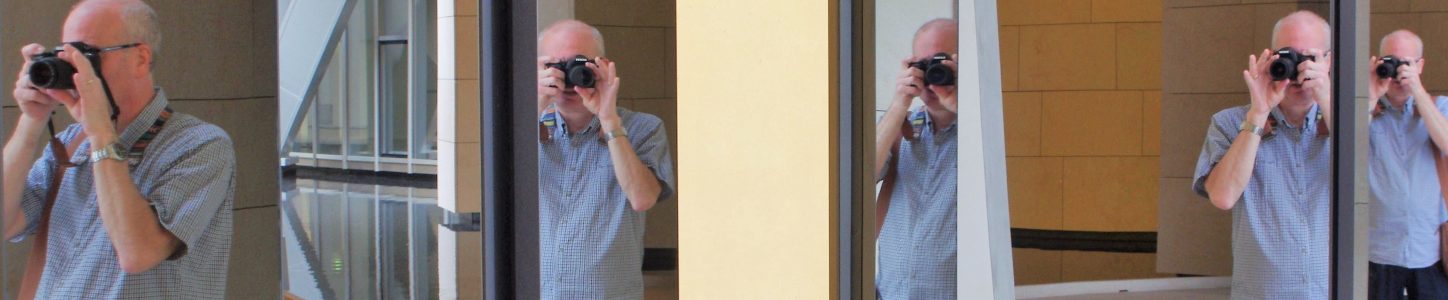

Last summer, I became the oldest living Murray in our family. Dad died in July. Technically, I have two cousins who are a little older, but thanks to the patriarchal convention of surname assignment, I carry the family name. So, I suppose I’m just the oldest male Murray. I have lived three score and ten years, which I realize has been a gift, especially when not long ago anyone over 50 was living on borrowed time.
When I was about 10 years old, my doctor told me he could hear a “click” in my heartbeat using just a stethoscope. He thought it might be a prolapsing valve and told me that someday I would be able to have an “echo” cardiogram that could confirm his diagnosis. It was several more years until our local hospital acquired that technology and I was among its first test subjects. My earliest ECGs were done with a multi-lead device using suction cups. Afterwords, I looked like I had been in the embrace of an octopus. I have seen the development of ECG devices to the point where I carry a credit-card-sized sensor that connects to my smart phone via Bluetooth. I can tell within 30 seconds whether my heart is in atrial fibrillation and can email the results to my doctor. I have had echocardiograms with and without color. I witnessed a cardiac catheterization procedure at Duke medical center in the 1970’s. I have had three of these, beginning in the 1980’s. Last year I had a cardiac ablation procedure to minimize the chances that my heart would go into A-fib. What was once cutting-edge has become routine, both in terms of technology and medication.
I am grateful to doctors, cardiologists, nurses, technicians, hospitals, and pharmaceutical companies for helping me stay alive this long. I hope to have more years to enjoy life on this beautiful blue sphere. Nevertheless, as some say, it’s not the years in your life, but the life in your years that counts. I’ve been playing trumpet for 60 years and enjoying photography for almost that long. I’ve been a dad for over 40 years and a husband for nearly 45 years. I’ve had the opportunity and means to travel to 18 other countries and most of these United States. I was a part of the world of higher education for 44 years as a student and teacher. I have a lot to be thankful for.
I reflect that Smallpox killed 500 million people between 1877 and 1977, when the disease was generally eradicated by vaccines. In the 1940’s and 1950’s, prior to vaccines, around 500,000 people died of polio each year. The infant mortality rate has dropped significantly in the last 100 years, in part because of advances in medicine. People born in the second half of the 20th century have benefitted from treatments that were previously only possible in dreams. The problem is we are beginning to take these advancements for granted or deride them because they are not 100% effective in every case.
Let’s not forget, in George Washington’s time, medicine consisted of poultices, leeches, and bloodletting. Doctors didn’t wash their hands. People regularly died of sepsis and other infections. There were no antiseptics, much less antibiotics. To be clear, I’m now 3 years older than Washington was when he died – of an easily treatable disease by today’s standards. Millions have benefitted from antibiotics, vaccines, and other medications that would have astounded the founding fathers. More people are living into their 80s and 90s than could have been imagined when I was born. It seems to me that we all should be more grateful for what has been passed on to us.
Nevertheless, each of us has an expiration date. We might be tempted to complain that grandpa could have lived a couple more years, but in what condition? My father made it to 96, but he had been in decline for years. While he was dying from bone cancer, my grandfather told me he wished he would have died in WWII. In both cases, there wasn’t anything that could have been done to change the outcome.
As Neil deGrasse Tyson has pointed out, in many ways the universe is trying to kill us. And it’s not technology’s fault that we can’t live forever or live without unwanted trouble. It seems to me when trouble comes our way, chances are we’ve had something to do with it – I’m thinking of acid rain, PFAS, leaded gasoline, microplastics, mercury pollution, lithium batteries, latent radiation, fertilizer runoff, coal dust, oil and chemical spills, food additives, and a host of other man-made irritants, all of which shorten life, even as medical professionals try to extend it. Maybe we should be more appreciative when people try to help us.
One more observation. I acknowledge how privileged and fortunate I am. A substantial part of longevity is good old-fashioned luck. I was born at a unique time and place to two loving parents who took good care of me. I’ve benefitted from these circumstances and have somehow sidestepped many misfortunes. I realize many people have not had the opportunities or luck I’ve had. So, there is no way I can take all the credit for how my life has turned out. Let’s just say I’m happy to be alive and I hope to live long enough to see the world at peace and governed by rational, compassionate people. I plan to do what I can to see the good in others and help others do the same. Let’s not take good things for granted while we try to fix what’s broken.
 MurrayWorks
Love this reflection and love you.
Happy birthday!
XOXO Tweeters
LikeLike